
The Decline of the Big House in Ireland
| By: | Terence Dooley |
| Publisher: | Merlin Publishing |
| Published: | April 2001 |
| Pages: | 256 |
| Categories: | Art |
| Language: | English |
| Available as: | Hardback |
| On sale at: |
As late as the 1860s, Irish landlords were still the wealthy élite of the country. During the relative affluence of the post-Famine years, they continued to spend lavishly on the upkeep of their estates. However, for a variety of reasons, by the late nineteenth century, landlords had begun to find their disposable income greatly diminished. With the advent of the Land League they faced increasing pressure to overturn the old ways of land management. social life was thrown into disarray, and the fabric The First World War proved an important watershed, and had a huge psychological effect. Big-house social life was thrown into disarray, and the fabric of a way of life began to disintegrate. The revolutionary years 1919-23 proved to be a further catalyst in the decline of the big house, and the foundation of the Irish Free State finally spelt the end for landlordism in Ireland. The Decline of the Big House in Ireland is unique in its examination of the reasons for the economic, social and political demise of the Irish landlord class. Terence Dooley's fascinating investigation provides an insight into the lives, attitudes and outlooks of the landed class, and examines the motivation behind the financial, social and political decisions that an ever-changing world forced them to make. While most of their class were left behind, whether through luck or astute management, some of the original owners succeeded in holding onto their homes. But by the middle of the twentieth century the great days of the big house were truly at an end.
Other Books From this Category
-
22 Nov 2026 - Kevin Kavanagh
Stephanie Deady: Paintings
-

12 Nov 2026 - Merrion Press
Some Like It Hot
By Niall Stokes
-

5 Nov 2026 - Hachette Books Ireland
Talk to Joe: Life, Liveline and Me
By Joe Duffy
For nearly three decades, Joe Duffy sat behind the mic as host of RTÉ's Liveline, the radio show that became Ireland's national sounding board. In this walk down memory lane, Joe takes readers inside...
-

22 Oct 2026 - Gill
This Boy's Heart
By John Creedon
John Creedon is a renowned storyteller. Following on from the sensational success of An Irish Folklore Treasury, here he seeks to capture the folklore of his own childhood. This Boy’s Heart is...
-
8 Oct 2026 - Merrion Press
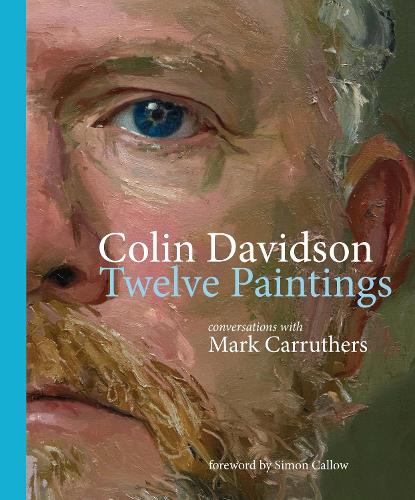
Colin Davidson: Twelve Paintings: Conversations with Mark Carruthers
Twelve Paintings is an intimate and compelling exploration of the life and work of the renowned Irish artist Colin Davidson. Structured around a series of deeply personal conversations with the broadc...
-

8 Oct 2026 - Penguin Books Ltd
Femme Feral
If there's one thing that Joanne McNally knows it's that we may have smart phones, Prozac and Prosecco, but we're still just animals trying to survive. And in Femme Feral, she explores the chaos and e...
-

25 Sep 2026 - Merrion Press
Gift Grub and Me
In this unfiltered, sharp-witted, and hugely entertaining memoir, Gift Grub’s Mario Rosenstock invites listeners behind the microphone to explore the unique journey that made him one of Ireland’s ...
-
21 Sep 2026 - Solomon Fine Art
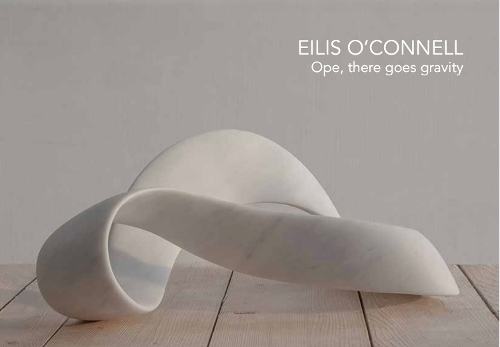
Eilis O'Connell: Ope, there goes gravity: 2026
-
11 Sep 2026 - Orpen Press
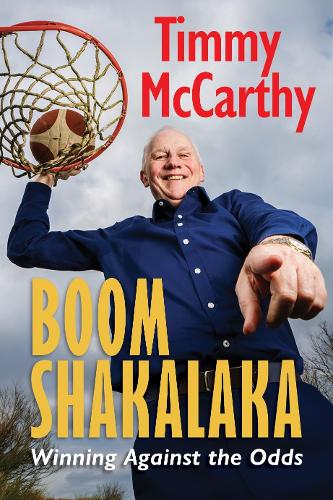
Boomshakalaka: Winning Against the Odds
Irish sporting legend Timmy McCarthy takes readers on an inspiring journey from his humble beginnings in Cork City to the commentary booths of the Olympic Games, becoming a national treasure and one o...
-
4 Sep 2026 - Orpen Press
Roll Away the Stone: When Journalism Was the Best Job in the World
By Declan Lynch
A nostalgic yet humorous look back at the glory days of print and broadcast journalism. Examines how the industry faces immense pressure today from Silicon Valley tech figures and political "fake news...
-
27 Aug 2026 - Kevin Kavanagh
Ashes of Roses: Gemma Browne
By Cathy Lomax
A published text that is an accompanying publication to a solo show of paintings by artist Gemma Browne. This extract from the publication is written by Cathy Lomax: ‘Some paintings of young w...
-
21 Aug 2026 - Solomon Fine Art
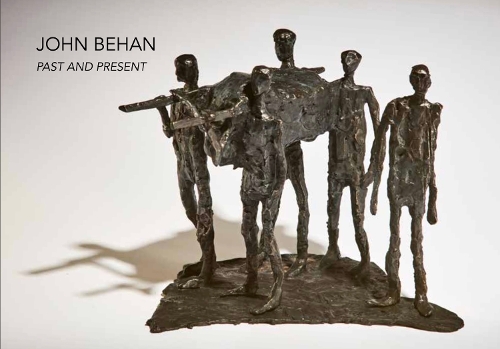
John Behan: Past and Present: 2026
-
13 Jul 2026 - National Gallery of Ireland
Rembrandt to Matisse — A Celebration of European Works on Paper
In celebration of Ireland’s Presidency of The Council of the European Union, this special exhibition features some fifty of our finest works on paper by artists from across Europe. Drawings, prints,...
-
12 Jun 2026 - Solomon Fine Art
Comhghall Casey: New Work: 2026
-
14 May 2026 - Solomon Fine Art
Eamon Colman: Curated by Rain: 2026
This new body of vibrant, abstract works by Eamon Colman draw on research gathered during a residency at Mount Congreve Gardens Co. Waterford. The works in Curated by Rain are based on observations ...
-

7 May 2026 - Douglas Hyde Gallery
Dreamshook: Isabel Nolan
-
30 Apr 2026 - Historical Committee of the Religious Society of Friends in Ireland
Dolls From The Attic: Dressed Undressed Played With
“Dolls in the Attic” is a study of dolls that came from Quaker Homes, including those in Ballitore, Co. Kildare. The book covers a wide variety of dolls and explains how they were played with by b...
-
14 Apr 2026 - National Gallery of Ireland
William Blake.: The Age of Romantic Fantasy
William Blake, a visionary artist and poet, was a defining force in Romanticism. His imaginative and unconventional works continue to inspire today. This exhibition, curated by Tate in partnership wit...
-
31 Mar 2026 - Kids' Own Publishing Partnership
A Form of Listening: Early Years Research Report
-
27 Mar 2026 - The Lilliput Press Ltd
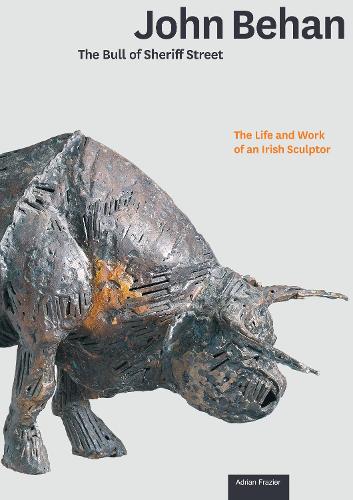
John Behan: The Bull of Sherrif Street
Adrian Frazier’s story about his friend John Behan is an informed, compelling personal account of this remarkable man. It gives focus and depth to the life of one of Ireland’s leading visual artis...
Other Books From this Author
-

28 Oct 2022 - Four Courts Press Ltd
The Country House and Its Visitors: Welcome and Unwelcome
By Terence Dooley, Christopher Ridgway
Country houses have always been a magnet for visitors. In early days individuals with the correct social credentials could gain entry, while visitors such as royalty were self-invited guests. With the...
-
29 Oct 2021 - Four Courts Press Ltd
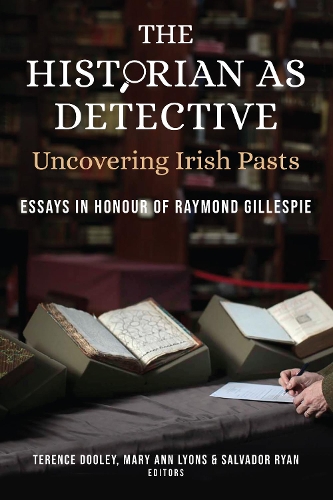
'The Historian as Detective. Uncovering Irish Pasts: Essays in honour of Raymond Gillespie'
By Terence Dooley, Mary Ann Lyons, Salvador Ryan
This collection of short essays presents the fruits of painstaking investigations conducted by over eighty scholars of history, early Irish, nua-Ghaeilge, archaeology, osteoarchaeology, forensic anthr...
-

30 Aug 2019 - Four Courts Press Ltd
'Sport and leisure in the Irish and British country house'
By Terence Dooley, Christopher Ridgway
Sir Shane Leslie once wrote that 'Country life was entirely organized to give nobility and gentry and demi-gentry a good time.' Throughout Ireland and Britain the country house was a centre of hospita...
-

30 Jun 2017 - Four Courts Press Ltd
'Monaghan: The Irish Revolution, 1912-23'
By 1912, a revolution had already taken place in Monaghan, a bloodless revolution that had resulted in the overthrow of one ruling elite to be replaced by another. What began in 1912 with the signing ...
-

25 Jan 2010 - University College Dublin Press
Ireland's Polemical Past: Views of Irish History in Honour of R.V. Comerford
Examines how the inhabitants of nineteenth and twentieth-century Ireland plundered their pasts for polemical reasons. This title includes the essays that explore how revolutionaries, politicians, chur...
