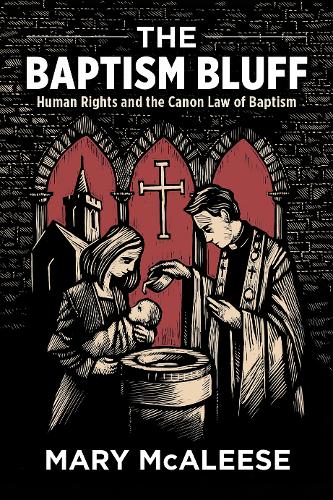
The Baptism Bluff: Human Rights and the Canon Law of Baptism
| By: | Mary McAleese |
| Publisher: | Orpen Press |
| Published: | October 2026 |
| Pages: | 280 |
| Categories: | Autobiography, Non-Fiction, Religion |
| Language: | English |
| Available as: | Paperback |
| On sale at: |
No one is born a Catholic. One becomes a Catholic by baptism. Most Catholics are baptised as babies. Manmade Church canon law deems them to have made baptismal promises which bind them to forever membership and which oblige them to be obedient to Church teaching in their public civic and private religious lives. The sacrament of Confirmation, also usually undertaken as minors, requires them to ‘renew their baptismal promises’, a glaring and largely unchallenged part of the baptism bluff. The Church is structured on the presumption that the pope and bishops, collectively known as the authors of the teaching Magisterium of the Church, have the right to regulate and control (including through penal sanctions), much of the life and especially the thinking of members of the Catholic Church. That presumption requires the Magisterium to ignore contemporary understanding of the inalienable human rights of the individual to freedom of conscience, opinion, expression and religion, and freedom to change religion. It requires all Catholics to overlook the fact that babies cannot give informed consent to promises at baptism and no one can consent on their behalf, robbing them forever of such a vital realm of choice. The baptismal bluff is a foundational, existential building block of the magisterial control infrastructure now facing an historic breakdown in trust. The Baptism Bluff is the story of one member’s journey deep into that presumption. It is a journey from the passive acceptance expected of Church members to a studied questioning of its origin, credibility, and the legitimacy of the laws which flow from it. It is a journey away from an infantilised religious sensibility, superficial and reliant on fear, and conformity, to an unforced spiritual conviction; from an excluding, inauthentic God to a God whose embrace is absolute inclusion, absolute love. Ironically it is not a journey away from the Church but the opposite, a journey into the overlooked deviations, deceptions and vanities which skewed its mission but which if reset and reformed could leave it redeemable still.
Other Books From this Category
-

3 Oct 2027 - Merrion Press
Too Far East is West
Michael Healy-Rae has never been afraid to say what he thinks. In Too Far East is West, one of Ireland’s most recognisable and outspoken politicians delivers his most revealing and personal book yet...
-
9 Sep 2027 - GroundedTruth Books
The Money Book School Forgot
By Glenn Ward
-
1 Aug 2027 - Four Courts Press Ltd
Medieval Dublin XXI
By Seán Duffy
This volume contains an abundance of new scholarship to shed light on Dublin’s fascinating medieval past, including reports of major archaeological excavations: Antoine Giacometti reveals exciting n...
-
1 Aug 2027 - Four Courts Press Ltd
Medieval Dublin XXI
By Seán Duffy
This volume contains an abundance of new scholarship to shed light on Dublin’s fascinating medieval past, including reports of major archaeological excavations: Antoine Giacometti reveals exciting n...
-
17 Jun 2027 - Womancraft Publishing
Wild & Wise: Guided Meditations for Healing the Wounds of Patriarchy & Awakening the Sacred Feminine
By Amy Wilding
-
17 Jun 2027 - Womancraft Publishing
Wild & Wise: Guided Meditations for Healing the Wounds of Patriarchy & Awakening the Sacred Feminine
By Amy Wilding
-
27 May 2027 - Gill
The Accidental Peacekeeper: Witness, War and the Weight of Being There
AN IRISH SOLDIER’S JOURNEY THROUGH THE FRONTLINES AND FAULT LINES OF THE TWENTY-FIRST CENTURY ‘I should never have been in any of these places. I should have been an English teacher in Nort...
-
13 May 2027 - Nine Bean Rows Books
Masaalchi: A Punk Spice Manifesto
By Arun Kapil
This is not a conventional cookbook, and it’s not a food memoir either. It’s a punk masaalchi’s kitchen manifesto: a book about flavour, instinct, rhythm and confidence. Arun Kapil looks at foo...
-
22 Apr 2027 - Nine Bean Rows Books
Smokin' Soul: The Essentials of Live-Fire Cooking: Volume 22
Fire is the oldest cooking tool we have. Long before kitchens, thermometers, recipes or even salt, there was fire and the understanding of how to live with it. Pat Conway and Jim O’Brien build fire...
-
16 Apr 2027 - Athy Heritage Company Limited
Cherry Pickings:
By Hugh Turner
-
1 Apr 2027 - Merrion Press
Revelations: Jeffrey Donaldson: Politician, Preacher, Predator
-

31 Mar 2027 - Four Courts Press Ltd
The Marshal Family in the Plantagenet World, 1189–1245
-
26 Mar 2027 - Four Courts Press Ltd
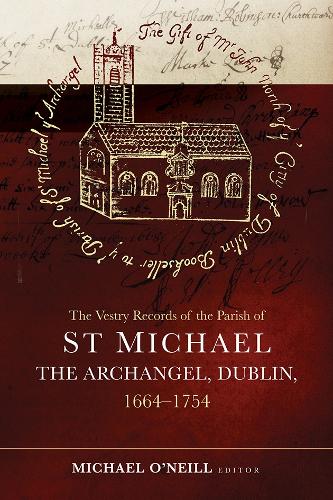
The Vestry Records of the Parish of St Michael the Archangel, Dublin, 1664–1754: Window on a Dublin city parish
-
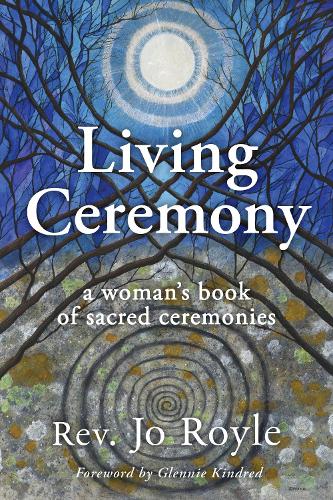
19 Mar 2027 - Womancraft Publishing
Living Ceremony: A Women’s Book of Sacred Ceremonies
By Jo Royle
-
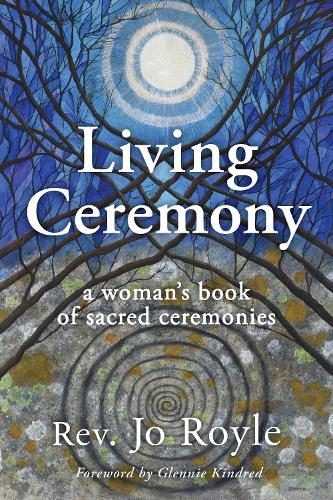
19 Mar 2027 - Womancraft Publishing
Living Ceremony: A Women’s Book of Sacred Ceremonies
By Jo Royle
-
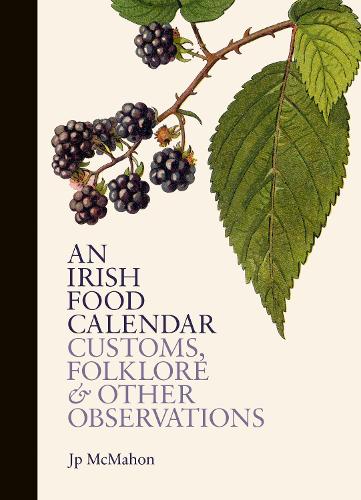
4 Mar 2027 - Nine Bean Rows Books
An Irish Food Calendar: Customs, Folklore and Other Observations
By Jp McMahon
An Irish Food Calendar explores the traditions, stories and seasonal rhythms that have shaped Ireland's culinary identity. Travelling through the Irish year, it uncovers forgotten customs alongside en...
-
4 Mar 2027 - Hachette Books Ireland
Blackrock Boys: A Story of Survival, Brotherhood and Ireland's Abuse Reckoning
By David Ryan
For decades, David Ryan carried the devastating consequences of childhood sexual abuse at Blackrock College. The trauma shaped his relationships, his identity, and his struggle to find peace. By 2022,...
-
1 Mar 2027 - The Examcraft Group
Teacher Planner - 9 Periods - Color B
-
1 Mar 2027 - The Examcraft Group
Teacher Planner - Weekly Core
-
1 Mar 2027 - The Examcraft Group
Teacher Planner - 6 Periods - Color B
