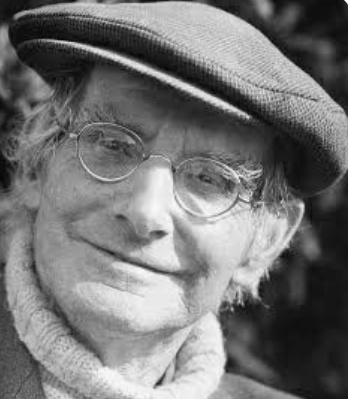
Seán O'Casey
| Date of Birth: | 30 March 1880 |
Seán O'Casey (Irish: Seán Ó Cathasaigh) John Casey (30 March 1880 – 18 September 1964) was an Irish dramatist and memoirist. A committed socialist, he was the first Irish playwright of note to write about the struggles and experiences of the working class in Dublin. He is best known for his "Dublin Trilogy", which includes The Shadow of a Gunman (1923), Juno and the Paycock (1924) and The Plough and the Stars (1926). O'Casey was born at 85 Upper Dorset Street, Dublin, as John Casey, the son of Michael Casey, a mercantile clerk (who worked for the Irish Church Missions), and Susan Archer. His parents were Protestants and he was a member of the Church of Ireland, baptised on 28 July 1880 in St. Mary's parish, confirmed at St John the Baptist Church in Clontarf, and an active member of St. Barnabas' Church on Sheriff Street until his mid-20s, when he drifted away from the church. There is a church called 'Saint Burnupus' in his play Red Roses For Me. O'Casey's father died when Seán was just six years of age, leaving a family of thirteen. The family lived a peripatetic life thereafter, moving from house to house around north Dublin. As a child, he suffered from poor eyesight, which interfered somewhat with his early education, but O'Casey taught himself to read and write by the age of thirteen. He left school at fourteen and worked at a variety of jobs, including a nine-year period as a railwayman on the GNR. O'Casey worked in Eason's for a short while, in the newspaper distribution business, but was sacked for not taking off his cap when collecting his wage packet. From the early 1890s, O'Casey and his elder brother, Archie, put on performances of plays by Dion Boucicault and William Shakespeare in the family home. He also got a small part in Boucicault's The Shaughraun in the Mechanics' Theatre, which stood on the site of what was to be the Abbey Theatre. He beame active in socialist republican politics, participated in the 1913 Lockout and was blacklisted, which resticted his opportunities for obtaining work. The death of his frined Thomas Ashe, who died in a hunger strike in 1917, inspired him to write. His writing career began in earnest around 1920. His first play, The Shadow of a Gunman, was performed at the Abbey Theatre in 1923. This play was followed by Juno and the Paycock in 1924, and The Plough and the Stars in1926. The subsequent years saw a large volume of work being produced including many plays that were performed around the world. On 18 September 1964 at the age of 84, O'Casey died of a heart attack, in Torquay, Devon. He was cremated at the Golders Green Crematorium. In 1965, his autobiography Mirror in My House (the umbrella title under which the six autobiographies he published from 1939 to 1956 were republished, in two large volumes, in 1956) was turned into a film based on his life called Young Cassidy. The film was directed by Jack Cardiff (and John Ford) featuring Rod Taylor (as O'Casey), Flora Robson, Maggie Smith, Julie Christie, Edith Evans and Michael Redgrave. O'Casey was married to Irish actress Eileen Carey Reynolds (1903–1995)[23] from 1927 to his death. The couple had three children: two sons, Breon and Níall (who died in 1957 of leukaemia), and a daughter, Shivaun. Source: Wikipedia.org
